
Quantitative Effects of Sleep Apnea
Principal Investigator: Ericson Kimbel, II
Advisors: Dr. Xiang Ji (Penn State), Dr. Jonna L. Morris (University of Pittsburgh), Dr. Devon Cook (Penn State)
Background: Sleep apnea is known to significantly impact cognitive and physical function, yet consistently measuring these behavioral deficits across varied hardware environments presents a distinct clinical challenge. This multi-year research initiative aims to empirically quantify the degradation of memory and reaction time in affected individuals, correlating cognitive fatigue with sleep quality.
Methods: The study originated in an English 202C course as a broad, 8-subject behavioral evaluation before transitioning into an IRB-exempt Math Research project. During this second phase, the scope was narrowed strictly to spatial memory and simple audio/visual reaction times across a new 8-subject pilot cohort. Crucially, a rigorous data expansion was conducted on two specific subjects using a 10x longer reaction testing duration to identify long-term markers of cognitive fatigue. To support the current transition to a 45-subject remote testing environment, a custom Python-based software suite (PsychoPy) was engineered. Development of this pipeline was accelerated using my custom Local AI Assistant (a distributed DGX Spark cluster) to rapidly architect and debug the core scripts while maintaining strict offline data privacy. Packaged as a standalone executable via Anaconda, the software deliberately strips out complex multi-stimuli tests to eliminate hardware processing latency, ensuring precise, replicable biometric data collection.
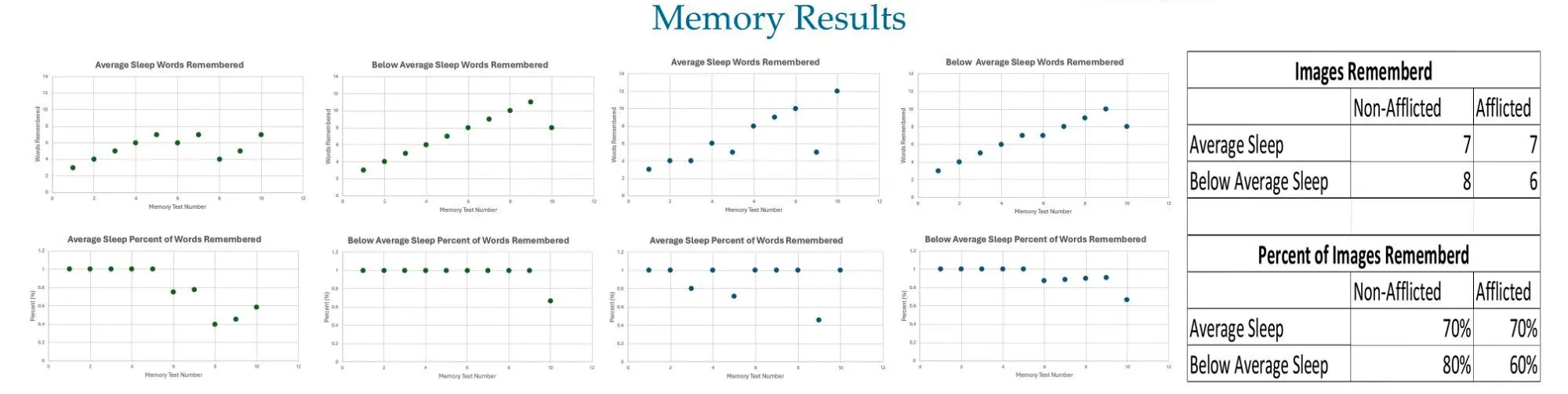
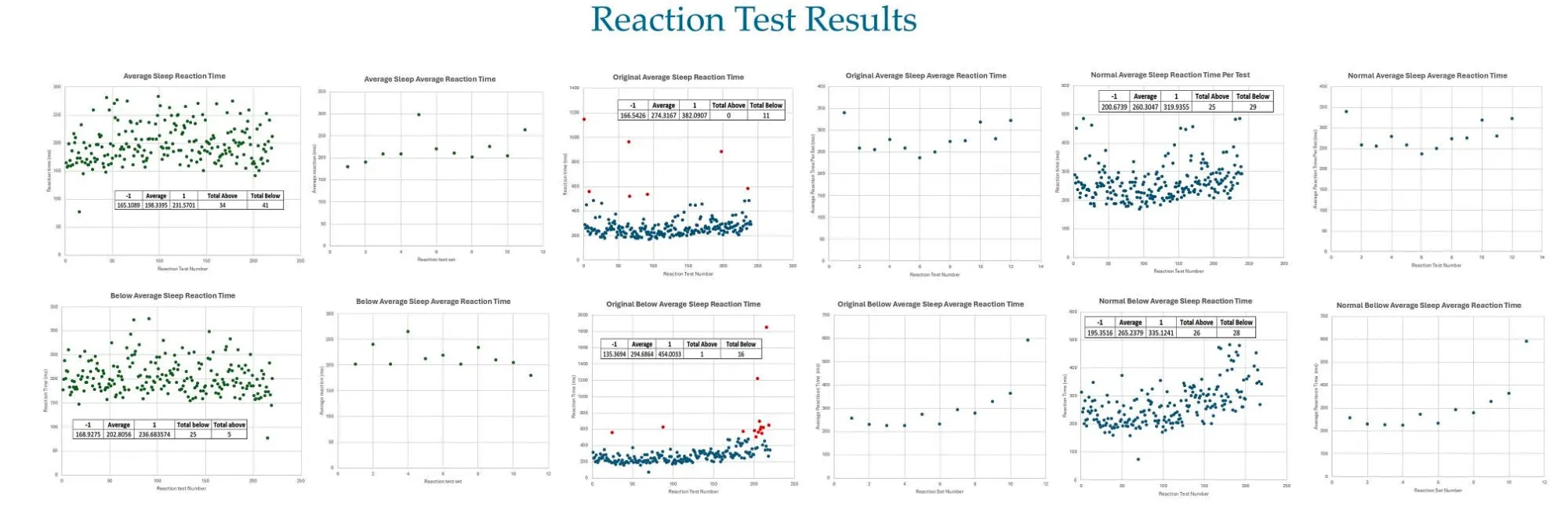
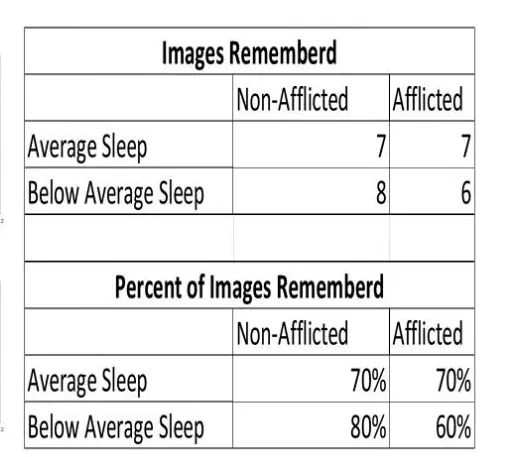
Results: Preliminary data from the localized pilot cohorts and extended-duration testing yielded distinct behavioral patterns. Subjects with sleep apnea exhibited accelerated initial learning rates during spatial memory tasks; however, during the 10x extended duration testing, they experienced a significantly faster onset of cognitive fatigue and performance degradation, particularly following self-reported periods of below-average sleep.
Conclusion: Early findings suggest a distinct pattern of rapid cognitive exertion and subsequent burnout in individuals suffering from sleep apnea. The research is currently expanding under a formal IRB protocol at the University of Pittsburgh to scale the methodology into a 45-subject remote study. This phase will directly integrate participants’ physiological sleep data to cross-verify cognitive behavioral metrics and establish robust diagnostic correlations.
Project Origins & English 202C (Penn State)
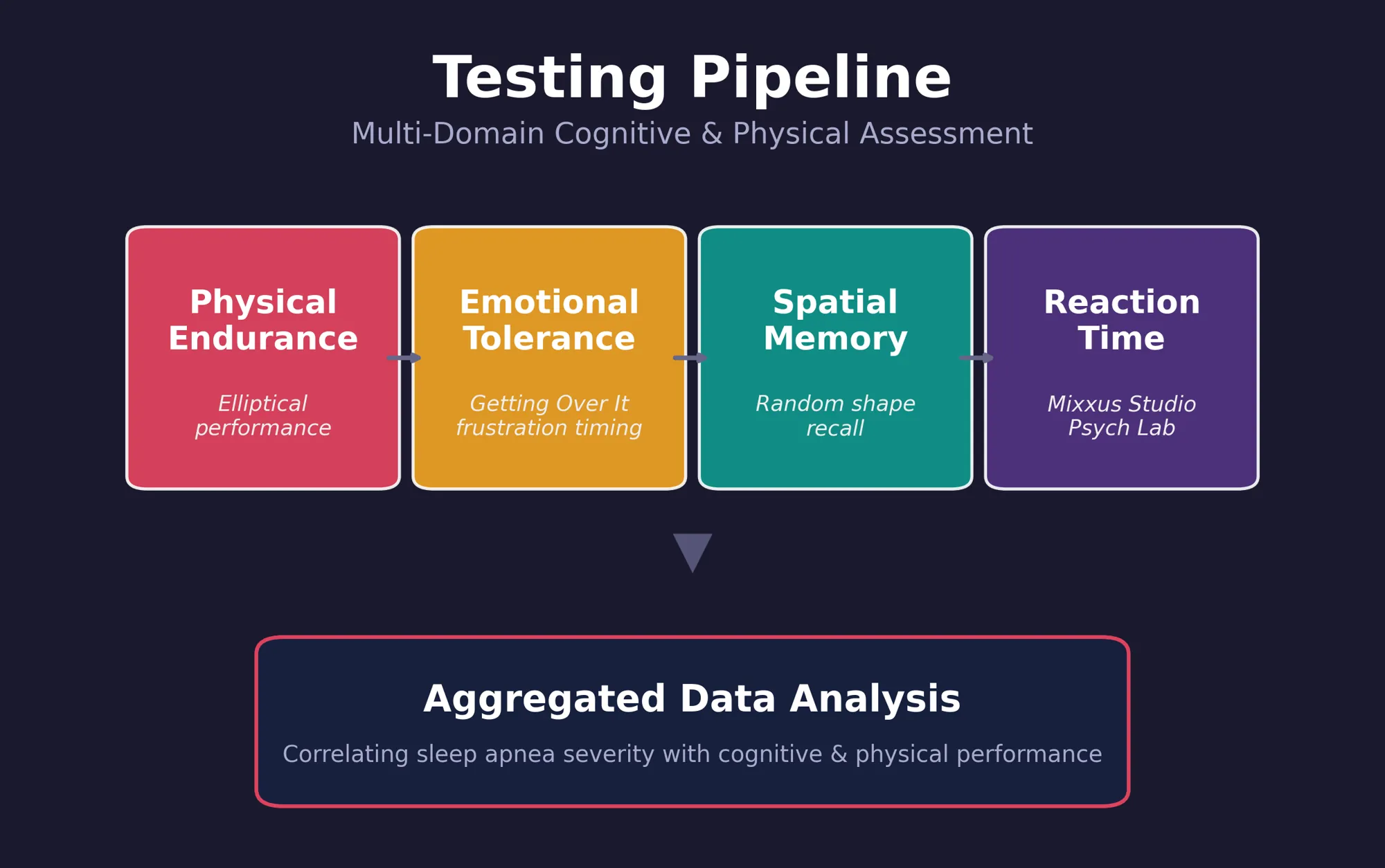
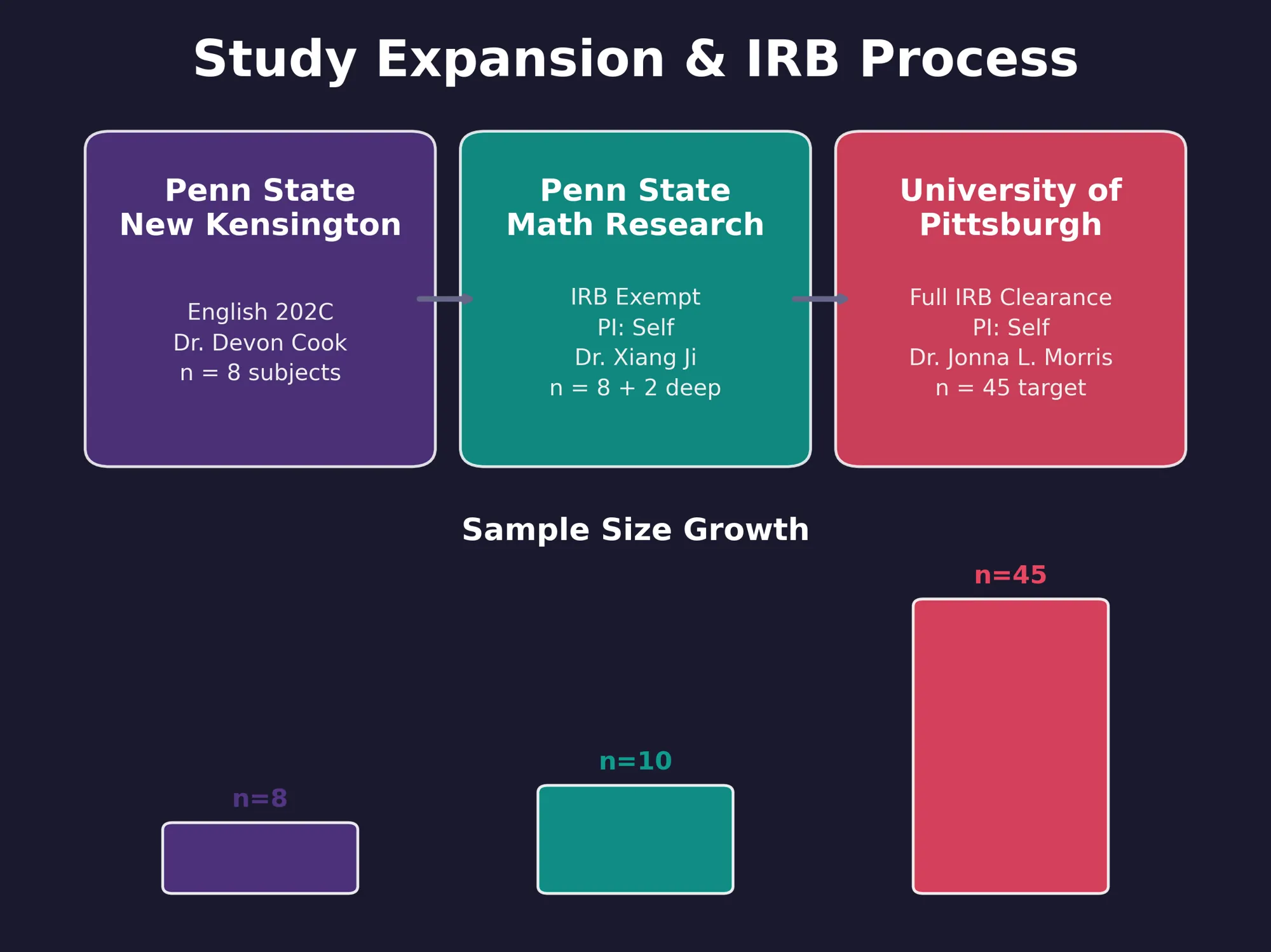
This research initiative originated in an English 202C course at Penn State New Kensington under Dr. Devon Cook. Initially designed as a broad behavioral study involving a cohort of 8 subjects, the early testing pipeline creatively measured a wide array of human variables. Testing included physical endurance on an elliptical, emotional tolerance (measured by time-to-frustration in the notoriously difficult video game Getting Over It), spatial memory using randomly generated shapes, and baseline reaction times utilizing Mixxus Studio’s Psychology Lab software.
Math Research & IRB Exemption (Penn State)
Driven to expand the project, I transitioned it into an extra-curricular Math Research study under the mentorship of Dr. Xiang Ji. Operating as the Principal Investigator, I earned class credit for the work, which qualified the study for formal IRB exemption. During this phase, I narrowed the scope strictly to memory and reaction time, testing a new 8-subject pilot cohort. Crucially, I also conducted a rigorous data expansion on 2 specific subjects, utilizing a 10x longer reaction testing duration to identify long-term markers of cognitive fatigue. This revealed fascinating preliminary findings: participants with sleep apnea exhibited accelerated initial learning rates but experienced a significantly faster onset of cognitive fatigue and ‘tired behaviors’ during extended testing.
Institutional Expansion & Formal IRB Clearance (Pitt)
The research is currently expanding at the University of Pittsburgh, where I continue to lead as the Principal Investigator under the mentorship of Dr. Jonna L. Morris. To elevate the project into a rigorous experimental cognitive-behavioral study, I am actively managing the formal IRB clearance process. This phase transitions the study to a scalable remote methodology with an estimated target of 45 participants, directly integrating physiological sleep data to cross-verify cognitive behavioral metrics.
Custom Software Engineering & Latency Elimination
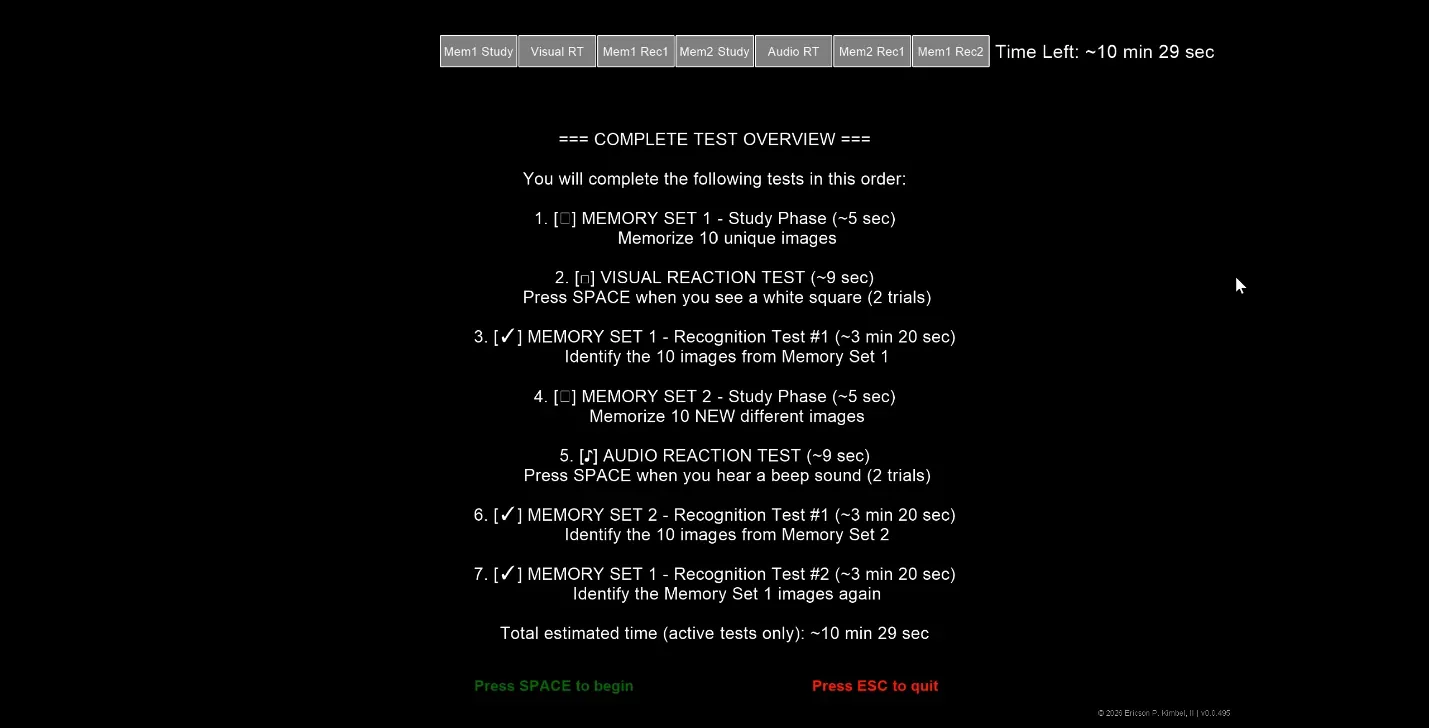
To ensure empirical accuracy and manage the data pipeline across this remote study, I engineered a custom open-source software suite (Apache 2.0) using Python and PsychoPy, packaged as standalone .exe distributions for elderly participants with dependencies managed via Anaconda. To accelerate this development cycle while maintaining absolute data privacy, I utilized my custom-built Local AI Assistant—a distributed DGX Spark cluster. By routing complex coding tasks through locally hosted models like Qwen 3.5, I was able to rapidly architect and debug 60,000+ lines of optimized code offline. Furthermore, to eliminate hardware processing latency and ensure the data could be easily replicated in clinical diagnostics, I streamlined the testing to focus purely on simple visual and audio reaction times, successfully stripping out complex multi-stimuli tests that had previously introduced data errors. The suite achieves <1ms measurement overhead through deferred logging and minimal measurement loops, with 99.99% framerate stability on premium hardware and across some mid level and low end hardware as well, more than enough for accurate data.