
Engineering Statics Bridge
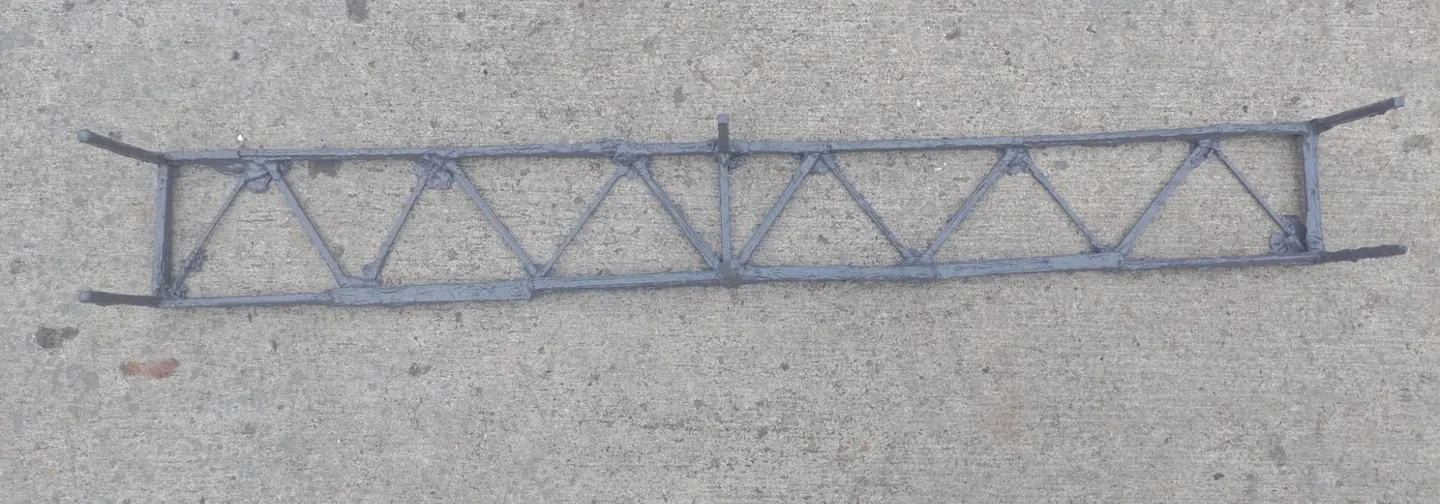
This project was an exercise in constraint analysis, structural statics, and extreme fabrication. Tasked with building a standard balsa wood truss bridge with no explicit limitations on adhesive usage, I opted to exploit this parameter to maximize absolute load capacity. Instead of relying on balsa as the primary load-bearing material, I engineered a balsa-epoxy composite by laminating 1/16-inch balsa strips with JB Weld to form dense, high-strength truss members. While this method incurred a heavy weight penalty (resulting in an 85% project grade for strength-to-weight efficiency), the final structure achieved its goal: it successfully supported over 150 lbs, physically breaking the 130 lb-rated testing equipment without sustaining a single point of structural failure.
Constraint Analysis & Material Exploitation
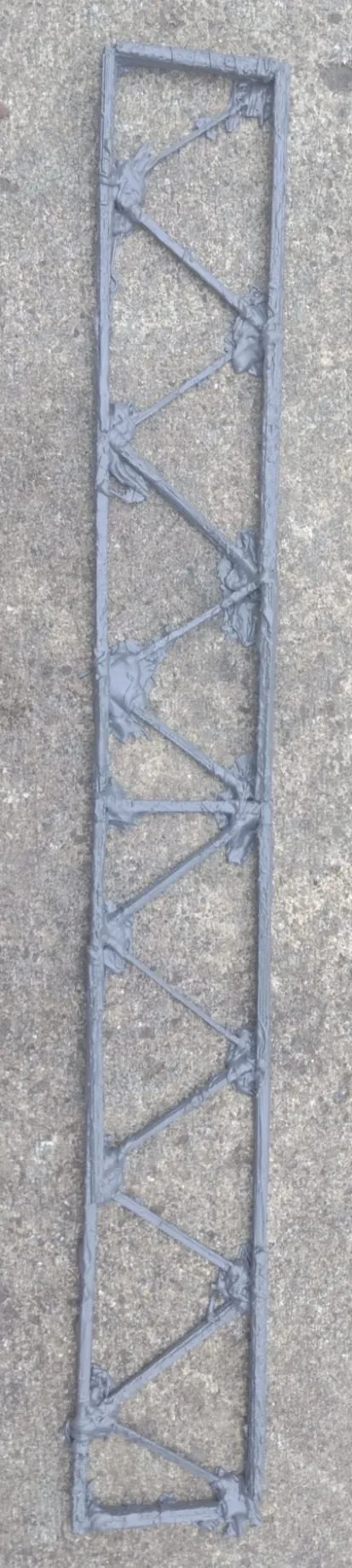
The assignment parameters strictly required the use of provided balsa wood for the frame but placed no limitations on the amount or type of adhesive. Recognizing that standard 1/4-inch balsa wood would be the structural bottleneck, I designed a composite alternative. For the vertical truss members, I calculated the required 1/4-inch thickness and replaced solid wood blocks with a 4x4 lamination of 1/16-inch balsa strips, heavily bonding them together using JB Weld. This effectively turned the balsa wood into a structural mold, with the cured epoxy acting as the true load-bearing core.
Precision Fabrication & Jig Manufacturing
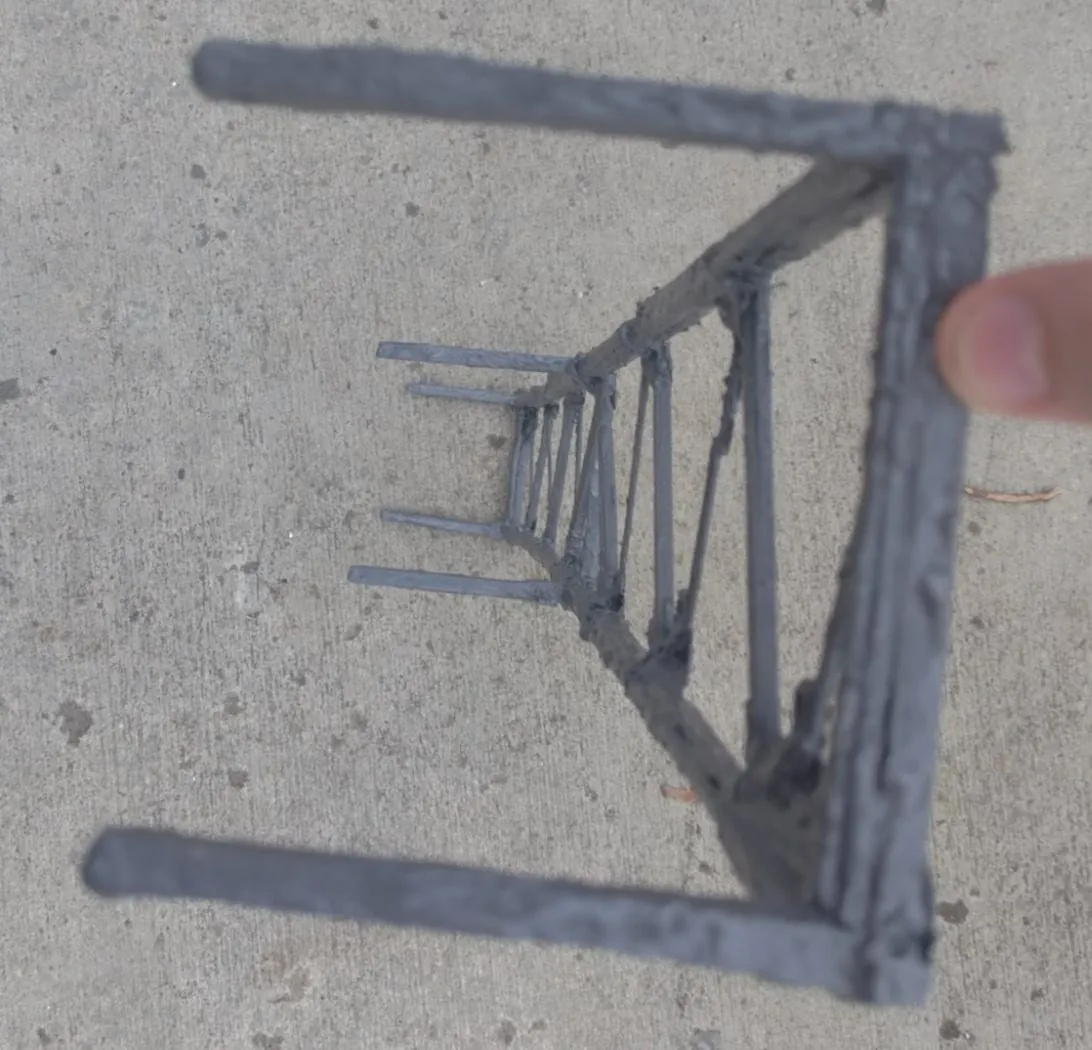
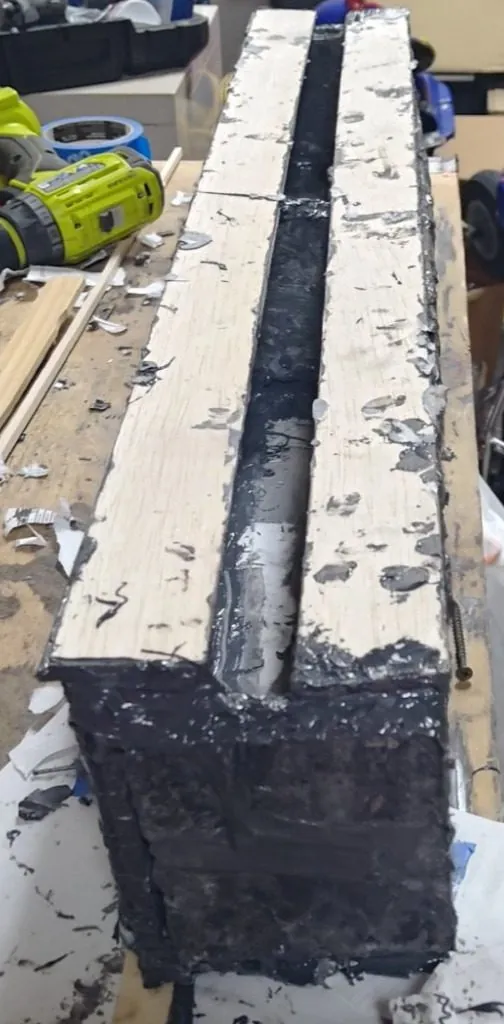
To ensure the JB Weld set perfectly without warping the structural geometry of the bridge, freehand gluing was not an option. I designed and built custom fabrication jigs to hold the laminated members firmly in place while the epoxy cured. Once the individual vertical and diagonal truss members were finalized, a secondary jig was utilized to assemble the cross-sections, ensuring absolute symmetry and an even distribution of static loads across the entire span.

Torsional Mitigation & Final Assembly
A common point of failure in standard truss bridges under extreme load is twisting, or torsional stress. To mitigate this, I added thin, wide structural members along the top and bottom planes of the bridge, tying the two main trusses together to prevent the structure from buckling laterally. Finally, the entire assembly was spray-painted gray to unify the composite materials and give it the aesthetic of a monolithic steel structure.
Testing, Equipment Failure, & Engineering Trade-offs
During the final load test, the bridge performed exactly as engineered, but with a highly unexpected outcome. The structure successfully supported over 150 lbs without a single point of deflection or failure. However, the sheer load capacity exceeded the limits of the testing equipment, physically breaking the 130 lb-rated testing rig. While I successfully built an indestructible bridge, the heavy reliance on JB Weld resulted in a poor strength-to-weight ratio, yielding an 85% final grade. This project served as an incredible real-world lesson in engineering trade-offs: optimizing for absolute strength often comes at the direct expense of weight and efficiency. Today, the bridge remains completely intact and sits in my workshop, where I plan to repurpose its massive structural capacity for future personal projects, such as supporting model train layouts and serving as a rigid base for small-scale mechanical builds.