
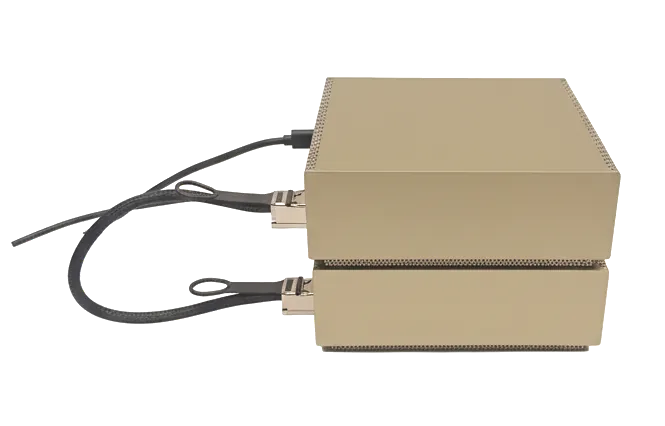
Localized Compute & Inference Pipeline
To comply with medical data privacy frameworks and achieve latency-free geometric synthesis, the infrastructure is deployed locally on an NVIDIA DGX Spark computing layer. The inference pipeline orchestrates localized, quantized models to parse spatial facial features without external data leakage.
Compute Fabric: The NVIDIA DGX Spark platform provides localized tensor execution for geometry compilation loops, removing outbound network dependencies and ensuring strict data sovereignty.
Data Ingestion: Spatial data from non-invasive 3D facial scans are structured into localized topology matrices, mapping critical facial landmarks.
Algorithmic Parser: A specialized Python processing layer scales these anthropometric coordinates, serving as the mathematical input layer that drives the downstream parametric CAD generation.
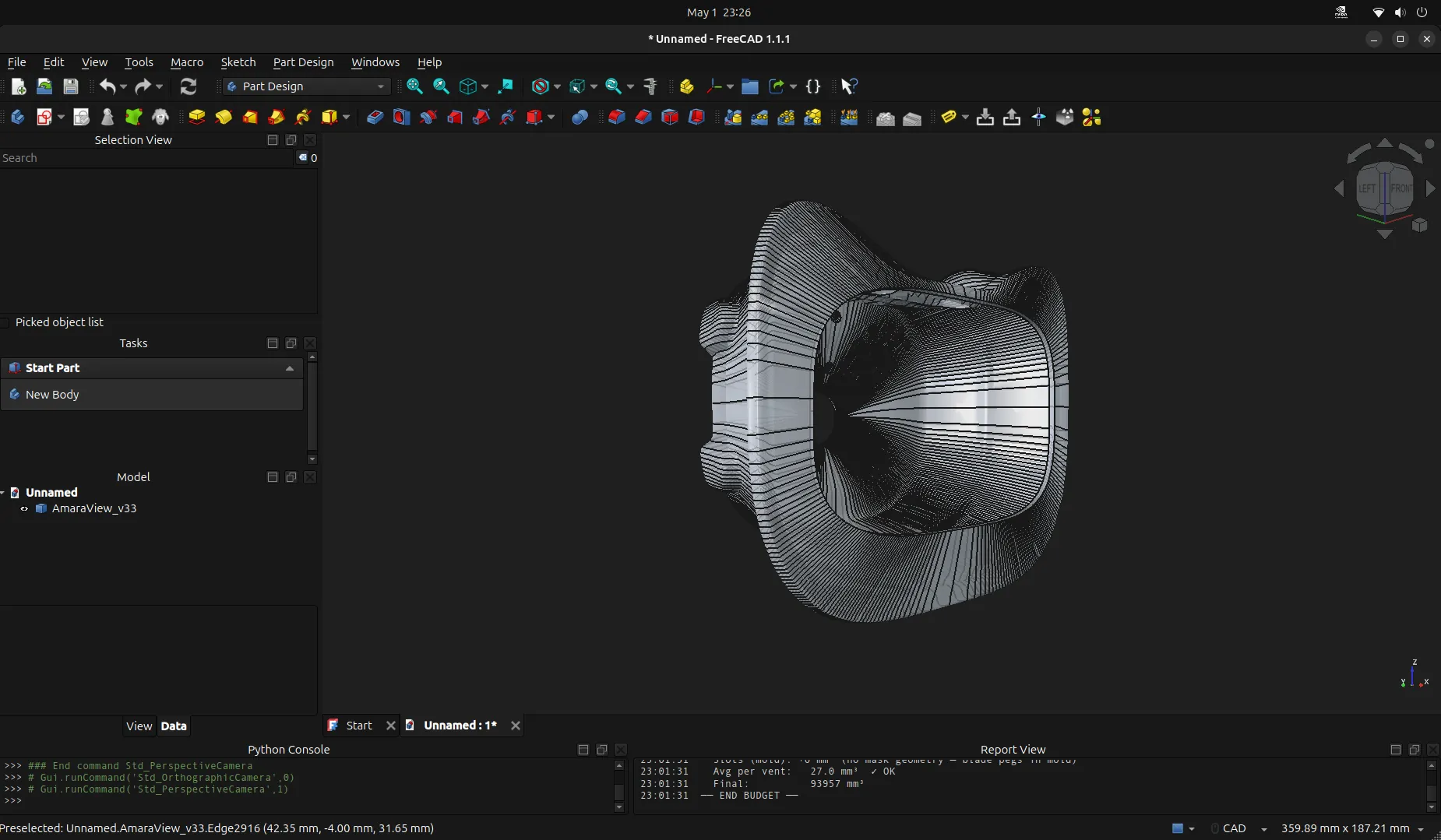
Automated Parametric Geometry Synthesis
Once the anthropometric spatial coordinates are compiled, the data maps directly to a generative script that builds the physical mask assembly inside a parametric CAD workspace under strict engineering constraints.
Cushion Contouring: The internal profile of the flexible cushion is synthesized using variable-radius loft splines that dynamically match the unique curvature of the patient’s face, distributing contact pressure evenly to prevent skin degradation.
Exhalation Vent Dynamics: The framework automatically calculates fluid-dynamic exhaust port positioning based on standard respiratory volume requirements, ensuring proper carbon dioxide washout.
Structural Rigid Shell: A secondary generative algorithm constructs an outer structural frame that aligns precisely with the custom cushion base, featuring integrated anchoring mechanisms for headgear retention straps.
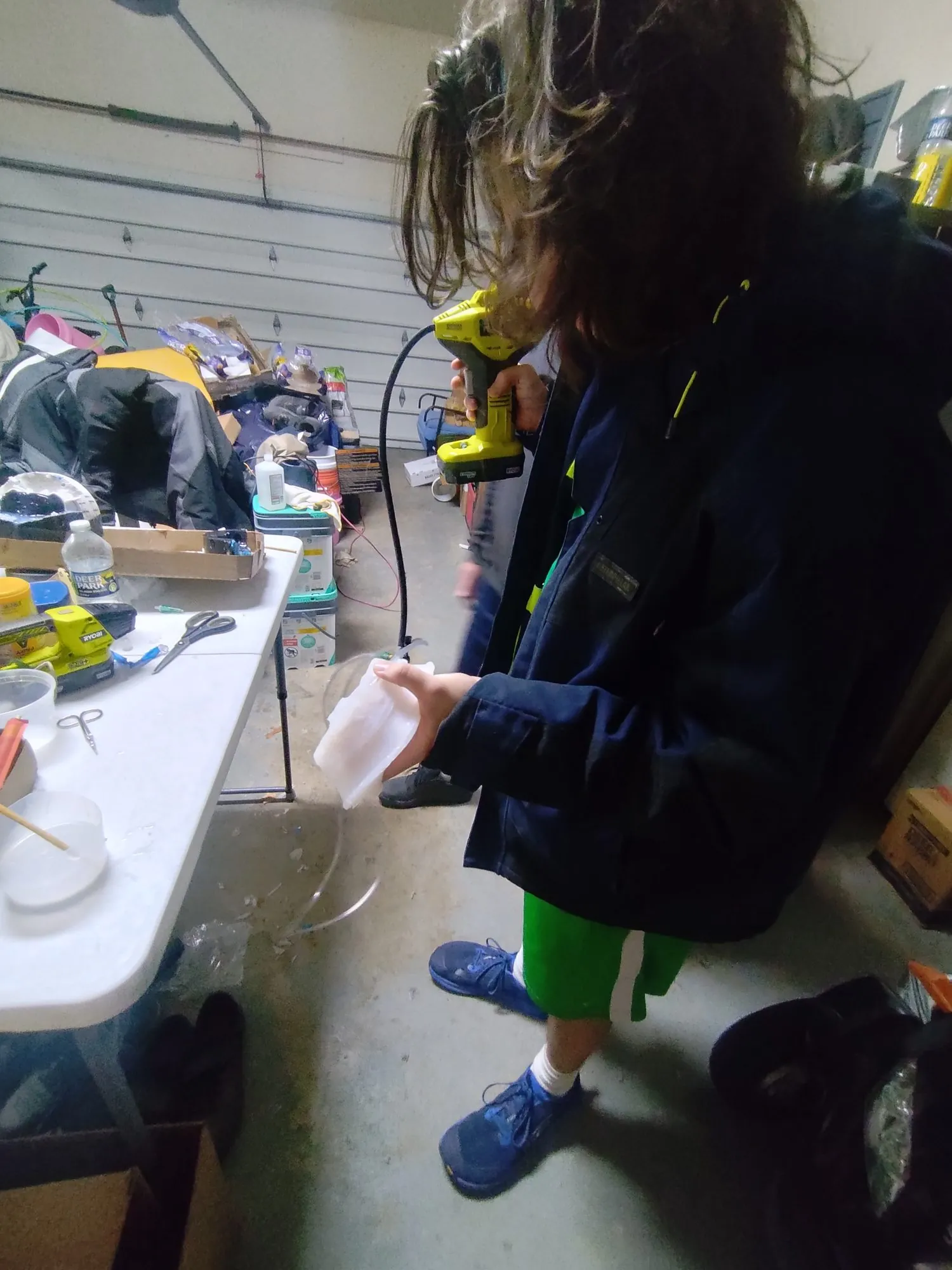
Multi-Material Additive Manufacturing Execution
Transitioning from a digital twin to a physical medical device requires precise manufacturing methods and regulatory validation frameworks. The current prototype utilized FDM printing to print the mold, modification of the mold, pouring medical silicone into the mold, injection molding certain sections, modification of the final mold, and then finally assembly.
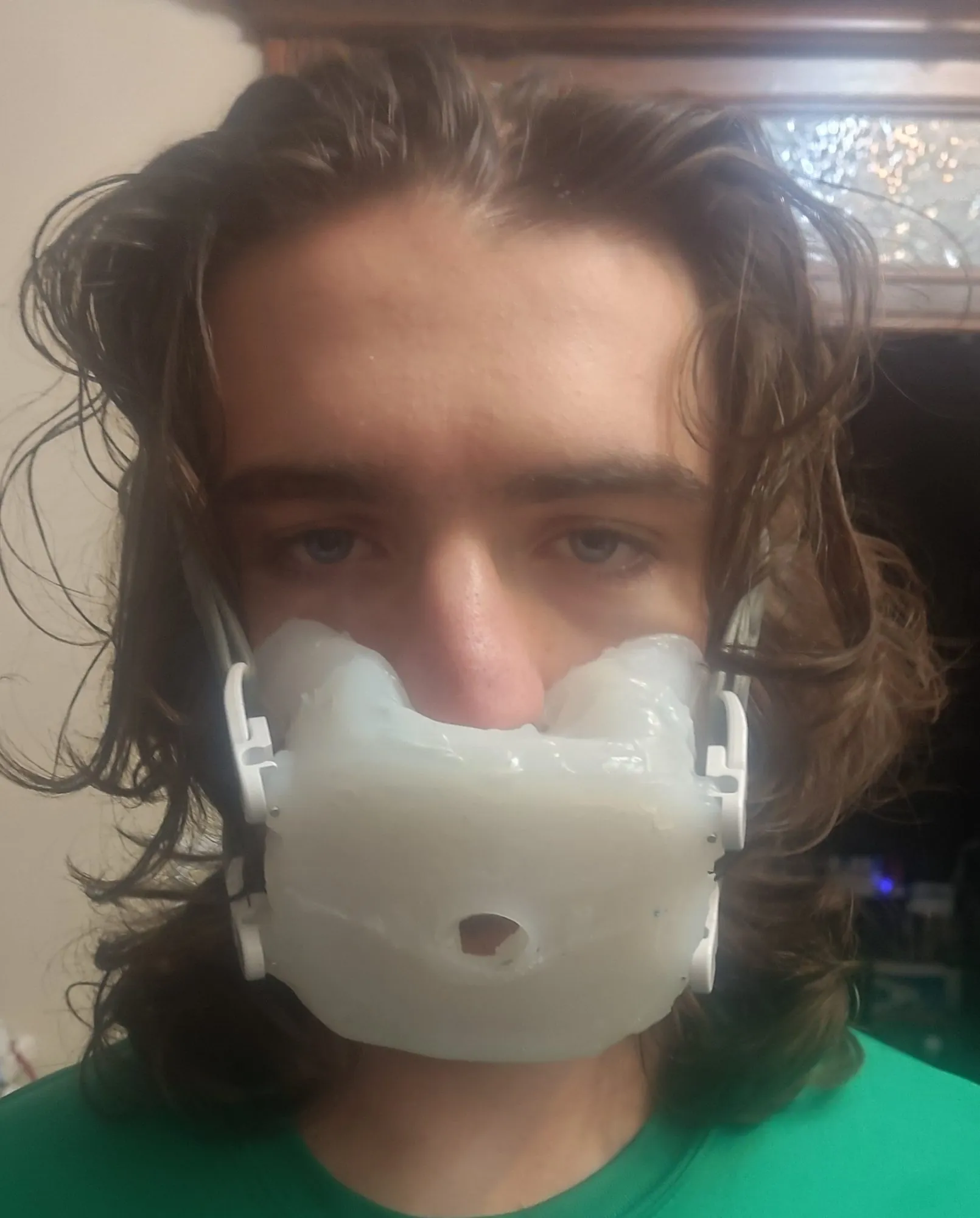
Current State
Since the prototype was successful for my face and fit my double deviated septum nose without causing large pressure on it like a symmetric mass manufactured mask, the mask design, mold algorithm, and feature set are being further optimized beyond the original 1,584+ versions.